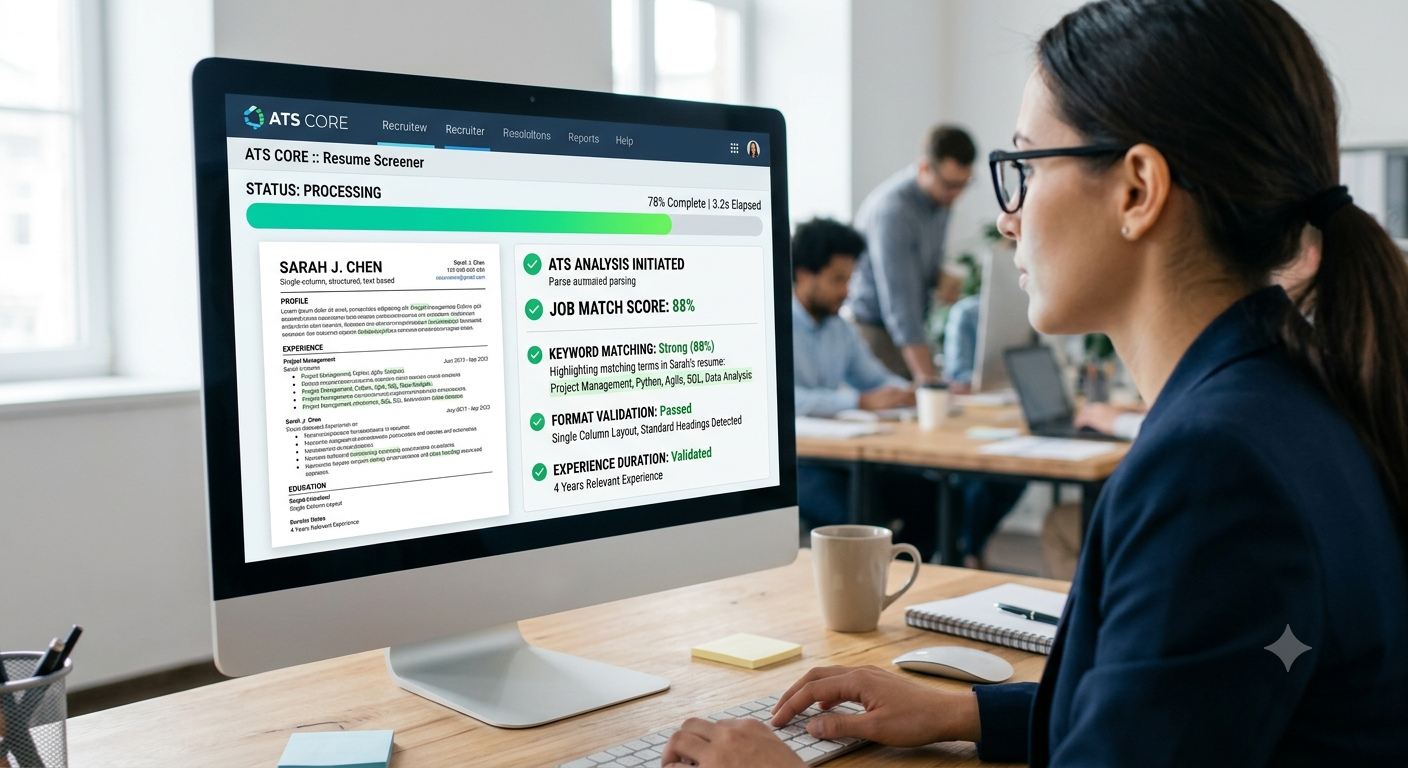
What Is an ATS?
ATS stands for Applicant Tracking System . It is software used by companies and recruiting teams to manage job applications and candidate information.
Instead of managing every resume manually from the beginning, employers can use an ATS to organize applications, extract information, search candidate profiles, and support their recruitment workflow.
What Does an Applicant Tracking System Do?
Depending on the software and employer configuration, an ATS may help with several parts of the hiring process.
Collect Applications
An ATS can collect resumes and application information submitted through a company's careers page or other recruiting channels.
Parse Resume Information
The system may extract information such as contact details, work experience, education, and skills from an uploaded resume.
Organize Candidates
Recruiters can use the system to organize applications, track hiring stages, and manage candidate information.
Support Candidate Search
Some systems allow recruiters to search or filter candidates based on qualifications, skills, or other application information.
5 Reasons ATS Compatibility Matters
Your Information Needs to Be Read Clearly
A resume with clear headings, readable text, and consistent formatting is easier for software and recruiters to interpret.
Relevant Keywords Help Communicate Your Skills
When your resume accurately includes relevant skills from the job description, recruiters can more easily identify your qualifications.
Job Relevance Matters More Than a Generic Score
A resume can be well written but still fail to emphasize the experience needed for a particular role. Comparing it with the actual job description provides more useful context.
Better Structure Improves Recruiter Readability
Standard sections such as Experience, Education, Skills, and Projects make it easier for a reader to find important information quickly.
It Helps You Tailor Your Application
An ATS checker can highlight areas to improve before you apply, helping you create a resume that better reflects the requirements of the role.
Does an ATS-Friendly Resume Guarantee an Interview?
No. An ATS-friendly resume can improve clarity and relevance, but it does not guarantee selection. Hiring decisions also depend on experience, qualifications, interviews, employer requirements, and the overall applicant pool.
How Does an ATS Process Your Resume?
The exact process depends on the employer and the ATS platform they use. However, most resume-submission workflows involve several common steps.
1. Resume Submission
You upload your resume through a company careers page, job board, or recruitment platform.
2. Resume Parsing
The system may extract details such as your name, contact information, work history, education, and skills.
3. Matching or Filtering
Depending on the employer's workflow, the system may support keyword searches, screening questions, or qualification-based filtering.
4. Recruiter Review
Recruiters or hiring managers review candidates using the application information and their hiring criteria.
What Does an ATS Resume Checker Check?
An ATS resume checker is designed to identify potential problems in your resume before you submit it. Different tools use different methods, but most focus on a combination of formatting, content, and job relevance.
1. Resume Formatting
The checker may identify formatting choices that could make a resume harder to read or parse.
- • Clear section headings
- • Consistent dates and spacing
- • Readable fonts
- • Selectable text
- • Avoiding excessive graphics
- • Simple and consistent layout
2. Keyword Matching
A job-focused checker may compare your resume with a job description to identify relevant skills, tools, qualifications, and terminology.
Example:
If a job requires React, TypeScript, REST APIs, and Git, a checker can help you see whether your resume clearly reflects those skills when you have the relevant experience.
3. Resume Sections
Some checkers look for important sections and whether your resume presents information in a complete, understandable structure.
4. Content and Bullet-Point Quality
Some tools review whether your bullet points are specific, clear, and focused on meaningful contributions.
Too vague
Responsible for developing features.
More specific
Built reusable React components for a customer dashboard, improving consistency across application screens.
5. Potential Parsing Issues
Some checkers identify possible issues that may affect how information is extracted from a resume.
- • Text embedded inside images
- • Unclear section headings
- • Inconsistent formatting
- • Overly complicated layouts
- • Missing contact information
Top 5 ATS Resume Checkers to Consider in 2026
There are several resume tools available, but they do not all focus on the same task. Some specialize in job matching, while others focus on resume writing, design, or job-search organization.
The tools below are popular options to explore. Features, pricing, and free usage limits can change, so check each provider's official website for current details.
Jobscan
Best known for: Resume-to-job description comparison.
Jobscan is widely known for its resume and job-description matching workflow. It helps jobseekers compare their resume with a specific job posting and identify relevant keywords or areas that may need attention.
What it can help with
- • Resume and job-description comparison
- • Keyword matching
- • Identifying missing skills and terms
- • Resume optimization suggestions
- • Job-specific match analysis
Why people use it: It focuses on the question, “How closely does my resume match this job?”
Resume Worded
Best known for: Resume writing and bullet-point feedback.
Resume Worded focuses on helping jobseekers improve how their experience is written. Its feedback can help users identify vague statements, improve bullet points, and communicate achievements more clearly.
What it can help with
- • Resume content feedback
- • Bullet-point improvement
- • Achievement-focused writing
- • Resume structure suggestions
- • General resume review
Why people use it: It can help turn generic responsibilities into clearer, more specific descriptions of your work.
Teal
Best known for: Combining resume tools with job tracking.
Teal combines resume-building and job-search organization features. It is designed for people who want to save job opportunities, tailor resumes, and manage their application process in one place.
What it can help with
- • Resume building
- • Job-description matching
- • Resume tailoring
- • Job tracking
- • Application organization
Why people use it: It can be useful when you are applying to multiple jobs and need to organize different applications and resume versions.
Rezi
Best known for: ATS-focused resume building.
Rezi is an AI-powered resume builder focused on helping users create structured resumes. It provides tools for writing, editing, and optimizing resume content.
What it can help with
- • Creating a resume from scratch
- • Structuring resume sections
- • Writing and editing bullet points
- • ATS-focused feedback
- • Resume formatting
Why people use it: It can be useful for jobseekers who need to rebuild or structure their resume before applying.
Enhancv
Best known for: Resume design and content-building tools.
Enhancv is known for resume templates and tools that help users create polished, visually appealing resumes. It also provides resume feedback and ATS-related guidance.
What it can help with
- • Resume creation
- • Professional templates
- • Resume content suggestions
- • Formatting and structure
- • Resume review
Why people use it: It can be useful for creating a polished resume while reviewing content and presentation.
ATS Resume Checker Comparison
Each tool has a slightly different focus. The right choice depends on whether you need job matching, writing feedback, resume building, or job-search organization.
| Tool | Main focus | Useful for |
|---|---|---|
| Jobscan | Resume-to-job matching | Comparing a resume with a specific job |
| Resume Worded | Content feedback | Improving bullet points and writing |
| Teal | Job search + resume workflow | Tracking applications and tailoring resumes |
| Rezi | ATS-focused resume building | Creating or rebuilding a resume |
| Enhancv | Resume design + feedback | Building a polished resume |
| JobNCV | Job-focused resume checking | Understanding resume relevance to a target job |
Product features and availability may change. This comparison describes the general focus of each tool, not a guarantee of identical features or employer outcomes.
Why Job-Specific Resume Checking Matters
One of the biggest limitations of a generalized resume review is that it may not understand the exact job you are targeting.
A resume can be professionally written, well formatted, and full of useful information—but still fail to emphasize the skills most relevant to a particular role.
One Resume, Two Different Jobs
Imagine you have a resume focused on React and frontend development. You apply for two different positions.
Job A: Frontend Developer
The job emphasizes:
- • React
- • JavaScript
- • TypeScript
- • CSS
- • UI development
Your frontend experience may be highly relevant to this position.
Job B: Backend Developer
The job emphasizes:
- • Node.js
- • Express
- • PostgreSQL
- • REST APIs
- • Backend architecture
The same resume may need different emphasis for this position.
General Resume Review vs Job-Focused Resume Check
Generalized Resume Checker
A general checker may focus on overall resume quality, formatting, writing, structure, and common resume best practices.
Main question: “Is my resume generally well written?”
Job-Focused Resume Checker
A job-focused checker connects the review to a specific job description. It can help identify relevant skills, missing keywords, and areas where your experience may need to be emphasized.
Main question: “How relevant is my resume to this job?”
JobNCV Resume Check: Analyze Your Resume Based on the Job
JobNCV is built around a practical idea: your resume should be evaluated in the context of the job you want.
Instead of treating resume quality as one universal number, JobNCV's resume-checking workflow focuses on helping jobseekers understand how their resume aligns with a specific job opportunity.
Check Your Resume Against the Job You Want
Upload your resume, add a job description, and understand which parts of your resume are relevant, which skills may need attention, and how you can improve your application.
Check Your Resume →How JobNCV's Job-Focused Resume Check Works
The workflow is designed to help you understand and improve your resume before submitting an application.
Upload or Use Your Resume
Start with the resume you already have. You do not need to rebuild everything before understanding what needs improvement.
Add the Job Description
Provide the job posting or the relevant job requirements for the position you are applying for.
Check the Match
Review your resume in relation to the job and identify relevant strengths, missing keywords, and areas that may need attention.
Improve Before Applying
Use the feedback to tailor your resume, improve clarity, and make sure your genuine qualifications are visible.
Why JobNCV's Approach Is Different
The main difference is the context used for the analysis. A general resume review may tell you whether your resume follows broad best practices. A job-focused review connects that feedback to the position you are targeting.
| Generalized Checker | JobNCV Job-Focused Check |
|---|---|
| Reviews resume quality broadly | Reviews resume relevance to a specific job |
| May provide general formatting feedback | Connects feedback to the target job |
| May identify common writing issues | Helps identify job-related keyword and skill gaps |
| Useful for improving a base resume | Useful for tailoring a resume before applying |
| “Is my resume good?” | “Is my resume relevant to this job?” |
A Job Match Score Is a Guide, Not a Hiring Decision
JobNCV's analysis is intended to help you improve your resume's relevance. It is not an official score from an employer's ATS and does not guarantee an interview. Always review suggestions and keep your resume truthful.
Why ATS Resume Checking Matters for Remote Jobs
Remote jobs attract applicants from many locations, which means employers may receive applications from a broad candidate pool. A clear and relevant resume can help communicate your qualifications effectively.
Whether you are applying for a remote software engineering role, customer support position, marketing job, or freelance contract, tailoring your resume to the actual job description is a useful step.
Related Job Search Guide
How to Find Legit Remote Jobs in 2026 (Without Falling for Scams)
Looking for remote opportunities? Read our guide to finding legitimate remote jobs, identifying common scams, and approaching remote job searches more safely.
What to Highlight in a Remote Job Resume
Depending on the role, remote employers may value evidence that you can communicate clearly, work independently, and collaborate effectively.
Written Communication
Show how you communicate with teammates, customers, or stakeholders through written channels.
Remote Collaboration
Mention relevant collaboration tools and workflows you have actually used.
Time Management
Highlight experience managing deadlines, priorities, and independent tasks.
Relevant Tools
Include tools, technologies, and platforms that match the job and your actual experience.
Example: Tailoring a Remote Developer Resume
Suppose a remote software developer job mentions React, GitHub, REST APIs, code reviews, and async collaboration. Your resume should clearly show relevant experience with those skills if you have it.
Example bullet point
Developed responsive React features, integrated REST APIs, and collaborated with team members through GitHub-based workflows to deliver web application updates.
Only include technologies and responsibilities that accurately reflect your experience. Remote-job keywords should support your qualifications, not replace them.
How to Use an ATS Resume Checker Correctly
An ATS checker is most useful when you treat it as a tool for improvement—not as a system you need to manipulate.
Start With the Actual Job Description
Identify the required skills, preferred qualifications, responsibilities, tools, and experience level.
Use Keywords Naturally
If you have experience with a required skill, mention it clearly. Avoid adding technologies you do not know just because they appear in the job posting.
Focus on Achievements
Explain what you did, how you did it, and what result your work produced. Use metrics when they are accurate and available.
Keep the Layout Readable
Use standard headings, readable fonts, consistent dates, and a logical structure. Avoid unnecessary visual complexity when applying through an ATS.
Review Every Suggestion
Automated tools can make mistakes. Keep only suggestions that are relevant, accurate, and helpful for the job.
Common ATS Resume Mistakes to Avoid
Many ATS problems are avoidable. Before submitting your resume, review these common mistakes.
Using the Same Resume for Every Job
A single resume may not emphasize the skills required for every role. Maintain a strong master resume and tailor relevant sections for each application.
Adding Keywords Without Experience
Do not list tools, technologies, or qualifications you do not genuinely possess. Your resume should remain accurate and credible.
Using an Overly Complicated Design
Excessive graphics, text embedded in images, and complicated layouts may make information harder to extract or read.
Writing Vague Bullet Points
Statements such as “worked on projects” do not communicate enough detail. Explain your contribution, tools, and outcomes when possible.
Trusting a Score Blindly
A score is a signal, not a hiring decision. Read the feedback and make changes that genuinely improve your application.
Ignoring the Job Description
A resume can be excellent in general and still be poorly aligned with a particular role. Always review the requirements of the job you are applying for.
Ready to improve your resume?
Check Your Resume Against Your Target Job
Before applying, understand how your resume aligns with the job description. Use JobNCV's resume-checking tools to identify areas for improvement and make your qualifications easier to understand.
Try JobNCV Resume Check →Frequently Asked Questions About ATS Resume Checkers
Here are answers to common questions about ATS-friendly resumes and resume-checking tools.
What is the best ATS resume checker?
The right tool depends on your needs. Jobscan focuses on job-description matching, Resume Worded focuses on resume content, Teal combines resume tools with job tracking, Rezi focuses on resume building, and Enhancv focuses on resume design and feedback. JobNCV focuses on checking resume relevance against a specific job.
Can an ATS resume checker guarantee an interview?
No. Resume checkers can help improve formatting, relevance, and clarity, but they cannot guarantee an interview or job offer. Hiring decisions depend on many factors.
Should I use the same resume for every job?
You can maintain one strong master resume, but tailoring the version you submit to the requirements of each job can help you emphasize the most relevant skills and experience.
Are ATS-friendly resumes always plain and boring?
No. An ATS-friendly resume can still look professional and polished. The priority is that the content remains readable, structured, and easy to understand.
Why is job-specific resume checking useful?
A job-specific check compares your resume with the actual requirements of a role. This can help identify relevant keywords, missing skills, and areas where your experience needs to be emphasized more clearly.
Does JobNCV check my resume against a job?
JobNCV's job-focused resume-checking workflow is designed to help users analyze their resume in relation to a specific job description and identify areas for improvement.
Final Thoughts
An ATS-friendly resume is not about adding as many keywords as possible or trying to achieve a perfect score. It is about presenting your genuine qualifications in a clear, structured, and relevant way.
General resume checkers can help improve writing and formatting, while job-focused tools can help you understand how your resume aligns with a particular opportunity.
Before applying, review the job description, tailor your resume honestly, and use feedback to make your experience easier to understand. A better resume is not just one that passes a checker—it is one that clearly communicates why you are relevant to the role.